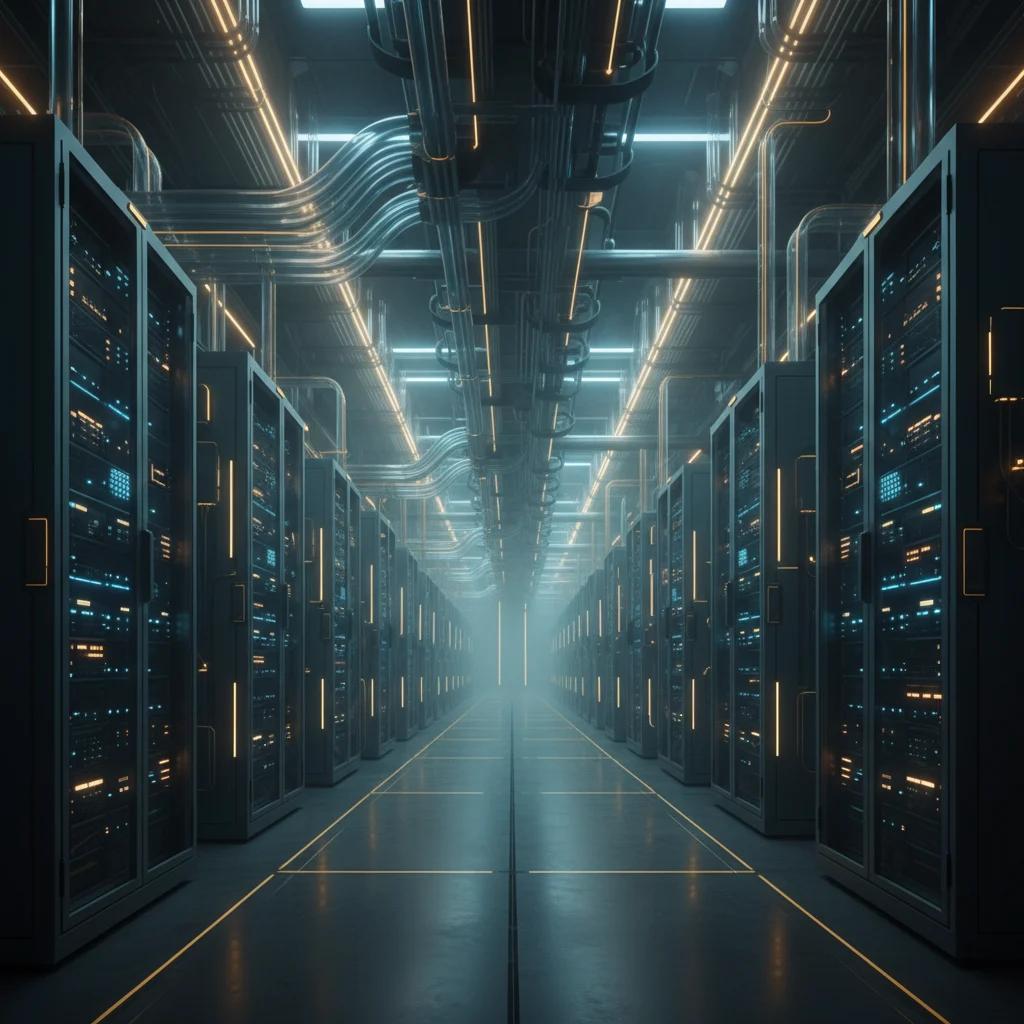
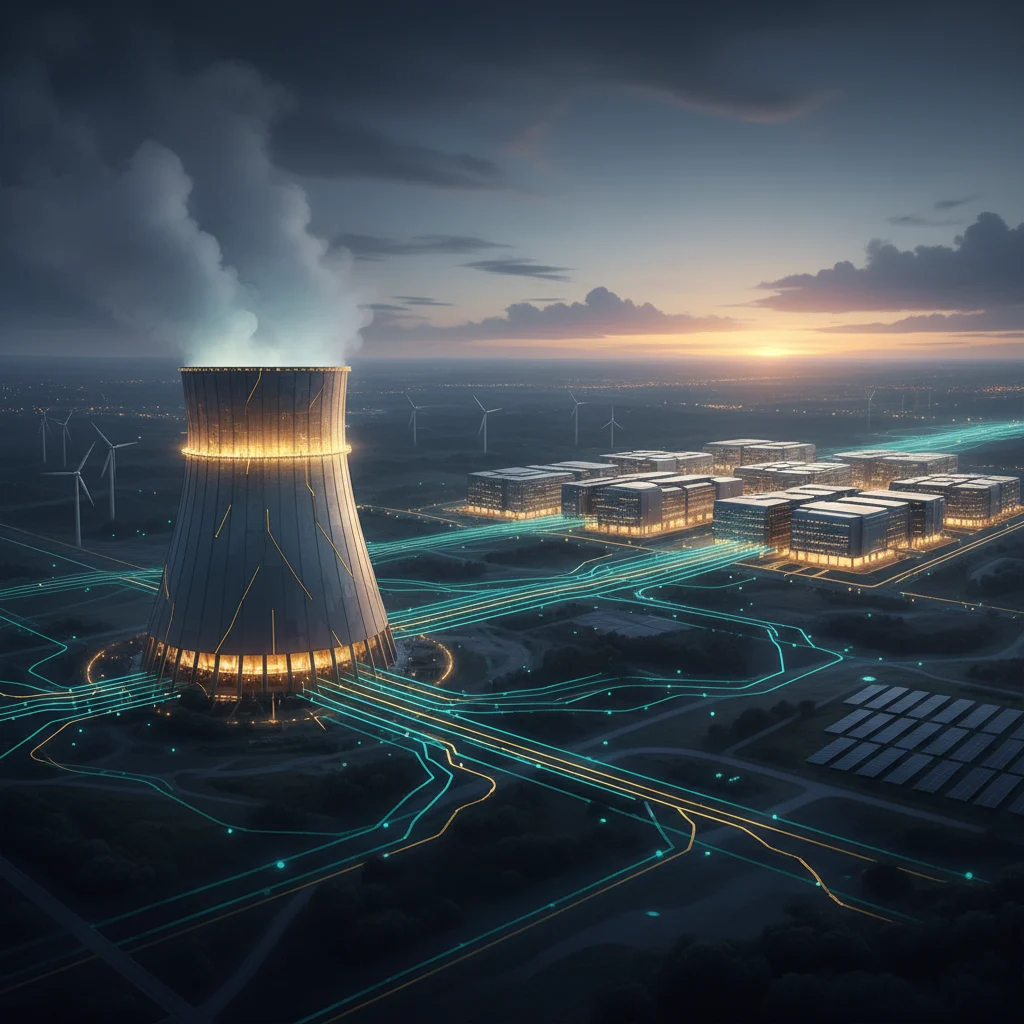
Quick answer: Nuclear energy stocks are getting attention because AI data centers need enormous, reliable electricity, and nuclear is one of the few sources that runs around the clock with a zero-carbon profile. As of May 30, 2026, Belanger Trading is watching nuclear power producers, uranium and fuel-cycle companies, and small modular reactor (SMR) developers — but the trade carries policy, permitting, cost, and execution risk. The key is separating companies with real assets, real contracts, and real cash flow from those that are mostly a good story.
Separating real assets and cash flow from a good story.
Last updated: May 30, 2026 — Belanger Trading updates this page as power deals, earnings, uranium prices, and reactor milestones change the picture. Market and earnings data as of the dates cited on each figure below.
Why we’re watching this
Most investors already understand the first AI trade: chips. The more interesting question is what AI needs after chips.
The answer is power. AI data centers consume electricity at a scale that is starting to strain grids, and that turns “where does the power come from” into a market story. Nuclear is one possible answer because it offers baseload generation — steady, around-the-clock output — with a zero-carbon profile and policy support in some markets.
But here is the caution to carry through the whole page: nuclear may be an AI power trade, but it is slow, political, capital-intensive, and not an instant solution. AI data centers are one reason investors are paying more attention to nuclear power. They are not the only reason. The trade also depends on policy, grid demand, fuel prices, permitting, and project economics — so “AI needs power, therefore buy nuclear” is exactly the leap this page is built to avoid.
That is why nuclear energy stocks are back on the watchlist. But this is not “AI plus reactors equals instant upside.” It is a slow-moving, capital-heavy, policy-sensitive corner of the market where the gap between a company with real cash flow and a company with a compelling pitch can be enormous. This page is about telling those two apart.
Every great trade or investment starts with deep research. Treat the names below as the start of yours — a watchlist, not a buy list.
Why AI is creating a power trade
The math behind the AI buildout runs into a physical wall: electricity.
Global electricity consumption from data centers is projected to roughly double to about 945 terawatt-hours by 2030 — close to the entire current power consumption of Japan, according to the International Energy Agency’s 2025 Energy and AI report. In the United States alone, data-center electricity use is projected to rise around 240 TWh (up about 130%) versus 2024, reaching roughly 430 TWh by 2030 — by which point U.S. data centers would use more electricity than all energy-intensive manufacturing combined. Electricity used by AI-focused data centers specifically is projected to more than quadruple over the period.
A few things follow from that:
- Chips are only one layer. The GPUs get the headlines, but a data center is useless without power to run it and cooling to keep it from melting down.
- Power becomes the bottleneck. When demand grows faster than new supply comes online, the constraint shifts from “can we buy enough chips” to “can we get enough megawatts, and where.”
- Investors look for the second layer. Once the chip names are crowded, attention moves to the picks-and-shovels around them — and power generation is one of the most physical, hardest-to-fake parts of that chain.
This is the same broadening we flagged on our best stocks to buy now watchlist: the market is starting to pay for the infrastructure around AI, not just the headline chip. Nuclear is one slice of that infrastructure. The full physical stack — REITs, servers, networking, cooling, and electrical equipment — is its own subject; we cover it on the data center stocks page. This page stays on the power layer.
Why nuclear is back on watch
Nuclear has structural features that fit the AI-power problem unusually well — and some real baggage that keeps it from being an easy answer.
What works in its favor:
- Baseload power. A nuclear plant runs at high output nearly all the time. Constellation Energy, the largest U.S. nuclear operator, reported a 92.3% nuclear capacity factor in Q1 2026 — that is the kind of round-the-clock reliability a data center wants.
- Zero-carbon profile. Hyperscalers have climate commitments. Nuclear lets them buy large blocks of firm, carbon-free power without depending on when the sun shines or the wind blows.
- Reliability versus intermittency. Solar and wind are cheaper to build but variable. Nuclear pairs well with a load that runs 24/7.
- Direct utility/data-center deals are already happening. This is the part that makes the theme real rather than theoretical — companies are signing 20-year contracts (more on those below).
- Policy support in some markets. Federal funding and licensing momentum have tilted more favorable to nuclear and advanced fuel than they were a decade ago.
What does not: new nuclear is slow, expensive, and politically sensitive. Permitting takes years. Cost overruns are the norm, not the exception, on large builds. And the most exciting part of the story — small modular reactors — has barely been commercialized anywhere. Nuclear is not an instant solution to an AI demand curve that is rising now.
Types of nuclear energy stocks
“Nuclear energy stock” covers very different risk profiles. We sort them into five buckets, roughly from most mature to most speculative.
| Bucket | What they are | Maturity |
|---|---|---|
| 1. Nuclear utilities / power producers | Own or operate existing nuclear plants; sell contracted power | Mature — real cash flow |
| 2. Uranium miners / fuel cycle | Mine, convert, enrich, and supply nuclear fuel | Mature to mid — real revenue, price-cyclical |
| 3. Small modular reactor (SMR) developers | Designing next-generation reactors not yet in commercial operation | Speculative — mostly pre-revenue |
| 4. Engineering / services / infrastructure | Construction, components, maintenance, fuel services | Mixed — varies by company |
| 5. ETFs | Baskets spanning some or all of the above | Diversified exposure |
The single most important thing this page does is keep three very different kinds of exposure from blurring into one trade:
- Operators / utilities / power producers = real assets and contracts. Plants that exist, electricity that sells, cash that flows, deals that are signed.
- Uranium / fuel-cycle names = commodity and supply-chain exposure. Real revenue, but tied to a cyclical fuel price and the broader nuclear supply chain.
- SMR developers = speculative, long-timeline, execution-heavy stories. A large upside pitch attached to reactors that, for the most part, do not yet exist or earn money.
All three can rise together when an AI-power narrative is running. They do not carry the same risk, and they should not be sized the same way.
1. Nuclear utilities / power producers
These companies already own the plants and already sell the electricity. When you hear “nuclear power for AI,” this is usually where the actual contracts live.
2. Uranium miners / fuel cycle
Reactors need fuel. This bucket covers uranium mining, conversion, and enrichment. Revenue is real but tied to the uranium price, which is cyclical and can swing hard.
3. Small modular reactor developers
The most exciting and the most speculative bucket. SMRs promise smaller, factory-built reactors that could one day be sited near data centers. These companies may offer upside if the technology and the regulatory path work — but they can also carry long timelines, financing risk, execution risk, and speculative valuations. Most are pre-revenue. Treat them as long-dated stories, not a near-term fix.
4. Engineering / services / infrastructure
The companies that build, maintain, and supply nuclear plants and the fuel cycle. Some are profitable established businesses; some are early. This bucket overlaps with the broader data-center electrical and engineering names.
5. ETFs
For investors who want the theme without picking a single name, nuclear and uranium ETFs bundle the exposure — at the cost of also owning the weaker names in the basket.
Names we’re watching
A name does not appear here unless we verified the facts. Every figure below is sourced and dated. None of this is a buy recommendation — these are research candidates with real risks attached, sorted by where they sit on the mature-to-speculative spectrum.
The crucial sort, stated plainly:
- Real cash flow and contracts today: CEG, VST (operators); CCJ (uranium); LEU and UUUU have real revenue but with important caveats.
- Mostly a story today (pre-revenue or near it): OKLO, NuScale (SMR).
Operators / power producers — real assets and contracts
Constellation Energy (CEG) — the lead name, but a crowded trade
What it does. Constellation is the largest operator of nuclear power plants in the United States, selling carbon-free electricity increasingly aimed at data centers.
Why it’s here. This is the clearest “nuclear power for AI” name with the contracts to back it up. Constellation has signed standout deals — a partnership with Microsoft to restart the Three Mile Island plant and a 20-year agreement with Meta to keep an Illinois reactor running — and closed a roughly $26.6 billion acquisition of Calpine, the largest independent power producer in the U.S.. In Q1 2026 (quarter ended March 31, 2026), it reported net income of about $1.59 billion, adjusted operating EPS of $2.74 (up from $2.14 a year earlier), and revenue of roughly $11.1 billion, up 64% year over year on the Calpine deal. It affirmed full-year 2026 adjusted operating earnings guidance of $11.00–$12.00 per share.
The honest part — consistent with how we frame it elsewhere. The story is excellent and the stock knows it. CEG traded around $287.75 on May 29, 2026, at a forward P/E near 24–25 — well above the ~16.8 industry median for independent power producers. That is the same read we carry on our best stocks to buy now watchlist, where CEG sits as the “wait for a pullback” name: a real, durable AI-power thesis attached to a stock that has already run hard. We’d rather research now and watch for a better entry than chase a premium name after a big move.
The risk. Premium valuation means the stock can fall sharply on any disappointment. Nuclear restarts and the Calpine integration carry regulatory, timeline, and execution risk.
Vistra (VST) — the other big producer with data-center nuclear contracts
What it does. Vistra is a large independent power producer with a nuclear fleet (including Comanche Peak in Texas and PJM-region plants) plus a big natural-gas and retail business.
Why it’s here. Vistra has put real long-term contracts behind the AI-power theme. In early 2026 it announced 20-year power purchase agreements with Meta to supply more than 2,600 megawatts of zero-carbon nuclear power from PJM-region plants, and it has a separate 20-year PPA for 1,200 MW of carbon-free power from Comanche Peak. In Q1 2026 it reported net income of about $1.03 billion on revenue of $5.64 billion. The stock closed around $158.69 on May 29, 2026.
The risk. Vistra’s earnings still lean heavily on its non-nuclear (gas and retail) business and on power-price spreads, which are cyclical. The data-center nuclear contracts are a growing piece, not the whole company, and the stock has rerated on that optimism.
Uranium / fuel cycle — commodity and supply-chain exposure
Cameco (CCJ) — the blue-chip uranium name
What it does. Cameco is one of the world’s largest uranium producers, and it also owns a stake in Westinghouse, the reactor and nuclear-services company.
Why it’s here. This is the most established way to play the fuel side. In Q1 2026, Cameco reported revenue of $845 million, net earnings of $131 million, and adjusted net earnings of $203 million ($0.34 adjusted EPS, up from $0.11 a year earlier), with its uranium segment benefiting from a higher average realized price of $66.21/lb versus $62.55/lb a year earlier. It pointed to average annual delivery commitments of about 28 million pounds from 2026–2030 — multi-year revenue visibility most of this sector lacks.
The risk. Uranium prices are cyclical and can swing hard, taking the stock with them. A higher reactor count is a long-cycle tailwind, not a quarter-to-quarter one.
Centrus Energy (LEU) — enrichment with real revenue and a government catalyst
What it does. Centrus enriches uranium and is one of the few U.S. companies positioned to produce HALEU (high-assay low-enriched uranium), the advanced fuel many next-generation reactors are designed to run on.
Why it’s here. It has real, growing revenue — Q1 2026 net income of $10.0 million on revenue of $76.7 million, up 5% year over year — and it raised full-year 2026 revenue guidance to $450–$500 million. The catalyst is HALEU: Centrus says it won a $900 million HALEU award in January 2026 that still has to be finalized through negotiations.
The risk. Much of the upside leans on government funding and contracts that are not fully locked, and the HALEU market depends on advanced reactors that mostly do not exist yet. Real business today, but the growth case carries policy risk.
Energy Fuels (UUUU) — uranium producer also chasing rare earths
What it does. Energy Fuels mines uranium at its White Mesa Mill in Utah and is building a rare-earth separation business alongside it.
Why it’s here. It has real uranium revenue — Q1 2026 revenue of roughly $42 million (including $35.7 million of uranium revenue on 510,000 lbs sold) and about 220,000 lbs of uranium produced — and a large working-capital cushion. But note: it reported a net loss of about $10.8 million for the quarter, and a chunk of the bull case rests on a still-developing rare-earths business, not just nuclear fuel.
The risk. This is more of a development-and-expansion story than CCJ. The rare-earths buildout is capital-intensive and unproven at commercial scale, and the company is not consistently profitable. Treat it as higher-variance than the established producers.
SMR developers — speculative, long-timeline, execution-heavy stories
These are the names where the gap between narrative and cash flow is widest. SMR companies may offer upside if the technology and the regulatory path work — but they can also carry long timelines, financing risk, execution risk, and speculative valuations. The upside pitch is real; so is the chance these timelines slip for years. Nothing here is a near-term solution to a demand curve rising now.
Oklo (OKLO) — pre-revenue, big narrative, no operating reactor
What it does. Oklo is developing “Aurora” fast-fission powerhouses aimed squarely at data-center and industrial power.
Why it’s here — and the caution. Oklo is the textbook example of a story stock in this theme. In Q1 2026 it reported zero revenue and a net loss of $33.1 million ($0.19 per share), funded by a large cash pile — about $2.54 billion as of March 31, 2026 after an at-the-market raise. It has generated headlines with an AI-nuclear partnership involving Nvidia and Los Alamos National Laboratory and targets first commercial power in late 2027 to early 2028 — a date that has to actually arrive. The stock has been volatile, trading around $66 in late May 2026.
The risk. No operating reactor, no revenue, and a valuation driven almost entirely by what might happen years from now. Licensing, fuel, construction, and timeline risk all sit ahead of it. This is venture-style exposure wearing a ticker.
NuScale Power (SMR) — furthest-along SMR design, still losing money
What it does. NuScale is one of the most advanced SMR developers, with a U.S.-certified small-reactor design and a flagship project (RoPower) in Romania.
Why it’s here — and the caution. NuScale is further along on design and licensing than most peers, but it is not yet a commercial business. Q1 2026 revenue fell to about $565,000 with a net loss of roughly $46.7 million, and it used a large amount of cash in the quarter while ending with about $1.0 billion in liquidity. The Romania project’s final investment decision looks likely to land somewhere between mid-to-late 2026 and early 2027 — meaning the headline deployments are still ahead, not booked.
The risk. Same family of risk as Oklo: minimal revenue, ongoing losses, and a thesis that depends on projects reaching final investment decisions and then actually getting built on schedule. The “furthest along” label is relative — it is still a development story.
ETFs (diversified exposure)
If you want the theme without single-stock risk, nuclear and uranium ETFs bundle it. A few of the larger ones, by way of example:
- Global X Uranium ETF (URA) — broad uranium exposure with roughly $7.4 billion in net assets and just over 50 holdings as of February 2026.
- Sprott Uranium Miners ETF (URNM) — a focused uranium-miner basket; Cameco was its largest position at about 20.2% as of February 2026.
- VanEck Uranium and Nuclear ETF (NLR) — a broader basket spanning uranium mining, nuclear utilities, and services.
The tradeoff with any basket is the same: you get diversification, but you also own the weaker names alongside the stronger ones, plus a fee. Check the actual holdings before assuming an ETF matches the slice of the theme you want.
The Belanger Take
The nuclear trade is real enough to watch, but not simple enough to chase blindly. It is slow, political, capital-intensive, and not an instant solution — not “AI plus reactors equals instant upside.”
Existing nuclear operators and power producers are different from early-stage reactor stories. Constellation and Vistra own plants and hold signed contracts; an early-stage reactor company with a great pitch and no revenue is a fundamentally different proposition. The uranium and fuel names sit in between: real businesses, but cyclical and, in some cases, leaning on government catalysts that aren’t fully locked.
Belanger Trading is watching where real power demand, real contracts, and real cash flows show up — not just where the best story is. The single best name on a chart and the single best story in the sector are often not the same thing, and in this corner of the market the gap is unusually wide.
What could go wrong
- Permitting delays. Nuclear projects move through regulators on multi-year timelines.
- Cost overruns. Large nuclear builds have a long history of running over budget.
- Political opposition. Nuclear remains politically sensitive in many places.
- Long project timelines. SMR commercialization is years out, at best.
- Uranium price volatility. The fuel names swing with a cyclical commodity.
- Regulatory risk. Rules, licensing, and subsidies can shift.
- Interest-rate sensitivity. Capital-intensive, long-duration projects are rate-sensitive.
- Speculative valuation. The story stocks can fall hard when sentiment cools, regardless of progress.
- Technology risk for SMRs. The designs still have to work, get licensed, and get built.
- AI power demand disappoints. If the data-center buildout slows, the whole second-layer thesis weakens.
- Regulated, slow-moving utilities. Even the strong operators can be constrained by the regulated nature of the business.
What to watch next
- Data-center power deals between hyperscalers and producers.
- Utility / data-center partnerships that turn demand into contracts.
- Nuclear power purchase agreements — length, size, and counterparty quality.
- Uranium prices as a driver of the fuel names.
- Reactor restart announcements (e.g., progress on Three Mile Island).
- SMR project milestones — final investment decisions, licensing steps, first criticality.
- Regulatory approvals at every layer of the chain.
- Earnings commentary from the power producers on data-center demand.
- Grid-constraint headlines that signal where the bottleneck is tightest.
- AI capex guidance from hyperscalers — the demand signal underneath the whole theme. Nvidia’s results are one read on that capex cycle; see our Nvidia earnings coverage.
How investors can use this list
This is a watchlist, not a buy list. A few rules for using it:
- Decide which layer you want. Stable contracted power (operators), commodity-cyclical fuel exposure (uranium), or venture-style reactor bets (SMRs) are three different risk profiles. Pick the one that matches your goals before chasing the theme.
- Separate the company from the setup. A real, durable thesis can still be a poor entry after a big run — CEG is the clearest example. A great story is not the same as a good price.
- Separate cash flow from narrative. The operators and uranium names have real revenue and contracts. The SMR developers, today, are mostly a story. Size them accordingly.
- Write down what would take a name off your list. A slipped reactor timeline, a broken contract, a uranium-price collapse, or a sign that AI power demand is cooling are all reasons to revisit.
AI power demand may make nuclear more important, but investors must separate real assets and contracts from speculative reactor stories.
Frequently asked questions
Why are nuclear energy stocks rising? Mainly because AI data centers need large amounts of reliable, around-the-clock electricity, and nuclear is one of the few zero-carbon sources that can deliver it. Investors are treating power as the next layer of the AI buildout after chips. But the move is uneven — operators with signed contracts have rerated on real demand, while some development-stage names trade on narrative more than cash flow.
How is nuclear power tied to AI? AI workloads run in data centers that consume electricity at enormous scale. The IEA projects global data-center power use to roughly double to about 945 TWh by 2030, with electricity used by AI-focused data centers specifically projected to more than quadruple. Nuclear’s appeal is that it provides steady baseload power with a zero-carbon profile, which is why hyperscalers like Microsoft and Meta have signed long-term nuclear power agreements.
What are the best nuclear energy stocks to watch? There’s no single answer that fits everyone, which is why we frame this as a watchlist. As of May 30, 2026, the names we’re watching span operators (CEG, VST), uranium and fuel-cycle companies (CCJ, LEU, UUUU), and speculative SMR developers (OKLO, NuScale), plus nuclear and uranium ETFs. Each carries a different risk profile, explained above. None of this is a recommendation to buy.
Are uranium stocks the same as nuclear energy stocks? Not exactly. Uranium stocks (like Cameco or Energy Fuels) are part of the broader nuclear theme — they mine and process the fuel reactors burn — but they trade on the uranium price cycle, which is its own driver. Nuclear power producers (like Constellation or Vistra) sell electricity and trade more on power contracts and demand. They overlap in the theme but behave differently.
What are small modular reactor stocks? SMR stocks are companies developing smaller, factory-built reactors meant to be deployed faster and nearer to demand — including data centers. Oklo and NuScale are two examples. The upside narrative is large, but most are pre-revenue with no operating commercial reactor, so they carry significant timeline, licensing, and execution risk. They are the most speculative slice of the theme.
Are nuclear energy stocks risky? Yes — and the risk varies a lot by bucket. Operators with contracted power have real cash flow but can trade at premium valuations that fall hard on disappointment. Uranium names swing with a cyclical commodity. SMR developers are pre-revenue stories that depend on projects that don’t exist yet. All of them face permitting, cost, regulatory, and political risk. This is not low-risk income exposure.
Is nuclear power a data-center solution? It’s one possible answer, not the answer. Nuclear offers reliable, zero-carbon baseload power, and real contracts already exist between hyperscalers and operators. But new nuclear is slow and expensive to build, and SMRs aren’t commercialized yet, so nuclear can’t meet a demand curve that’s rising now on its own. It’s part of a mix that also includes natural gas, renewables, and grid upgrades — the broader picture we cover on the data center stocks page.
What should investors watch in nuclear stocks? The signals that turn the story into cash flow: new data-center power deals and PPAs, uranium prices, reactor restart progress, SMR project milestones (especially final investment decisions and licensing), regulatory approvals, and AI capex guidance from the hyperscalers driving the demand. A name’s place on a watchlist should change when those signals do.
Get the free Belanger Trading watchlist
AI needs more than chips. It needs power. Belanger Trading tracks the stock ideas, the catalysts behind them, and the risks worth watching beneath the surface — and sends them to your inbox as the picture changes. Get the free Belanger Trading watchlist → No cost, unsubscribe anytime.
See also
- Best stocks to buy now — our broader research watchlist, where CEG sits as the “wait for a pullback” AI-power name.
- Data center stocks — the full AI infrastructure stack beyond power: REITs, servers, networking, cooling, and electrical equipment.
- Nvidia earnings — a read on the AI capex cycle that drives data-center power demand.
- Cheap stocks to buy now — beaten-down names worth a closer look.
Sources
- Data-center and AI electricity demand to 2030 — IEA, Energy and AI executive summary (2025); IEA, Energy demand from AI
- Constellation Energy (CEG) Q1 2026 results, Calpine, capacity factor, guidance — TIKR, May 2026; Investing.com earnings call transcript, May 2026; Microsoft/Meta deals and Calpine acquisition — Yahoo Finance Energy; Yahoo Finance Energy; price and forward P/E — GuruFocus, May 2026
- Vistra (VST) Q1 2026 results and Meta/Comanche Peak nuclear PPAs — TIKR, May 2026; QuiverQuant; Simply Wall St; price — TradingView
- Cameco (CCJ) Q1 2026 results, realized uranium price, delivery commitments — CoinCentral, May 2026; StockTitan SEC filing summary
- Centrus Energy (LEU) Q1 2026 results, guidance, HALEU award — StockTitan SEC filing summary; Motley Fool earnings transcript, May 2026; AOL/transcript, May 2026
- Energy Fuels (UUUU) Q1 2026 results, uranium production and revenue, net loss — Energy Fuels press release, May 6, 2026 (PR Newswire)
- Oklo (OKLO) Q1 2026 results, cash position, Nvidia/LANL partnership, timeline — BigGo Finance, May 2026; StockTitan SEC filing summary; Yahoo Finance Energy; price — StockTitan
- NuScale Power (SMR) Q1 2026 results, liquidity, RoPower timeline — StockTitan SEC filing summary; NuScale press release, May 2026; FID timing — Balkan Green Energy News
- Nuclear and uranium ETFs (URA, URNM, NLR) net assets and holdings — The Motley Fool, nuclear ETFs (Feb 2026 data)